
Odisha News, Odisha Latest news, Odisha Daily - OrissaPOST
  • Home
  • Trending
  • State
  • Metro
  • National
  • International
  • Business
  • Feature
  • Entertainment
  • Sports
  • More..
    • Odisha Special
    • Editorial
    • Opinion
    • Careers
    • Sci-Tech
    • Timeout
    • Horoscope
    • Today’s Pic
  • Video
  • Epaper
  • News in Odia
  • Home
  • Trending
  • State
  • Metro
  • National
  • International
  • Business
  • Feature
  • Entertainment
  • Sports
  • More..
    • Odisha Special
    • Editorial
    • Opinion
    • Careers
    • Sci-Tech
    • Timeout
    • Horoscope
    • Today’s Pic
  • Video
  • Epaper
  • News in Odia
No Result
View All Result
OrissaPOST - Odisha Latest news, English Daily -
No Result
View All Result

Sector vital to greater well-being

Agricultural development is of continuing importance to the nation to ensure poverty reduction

Pradeep Kumar Panda
Updated: August 12th, 2018, 23:59 IST
in Opinion
0
Share on FacebookShare on TwitterShare on WhatsAppShare on Linkedin
Pradeep Kumar Panda

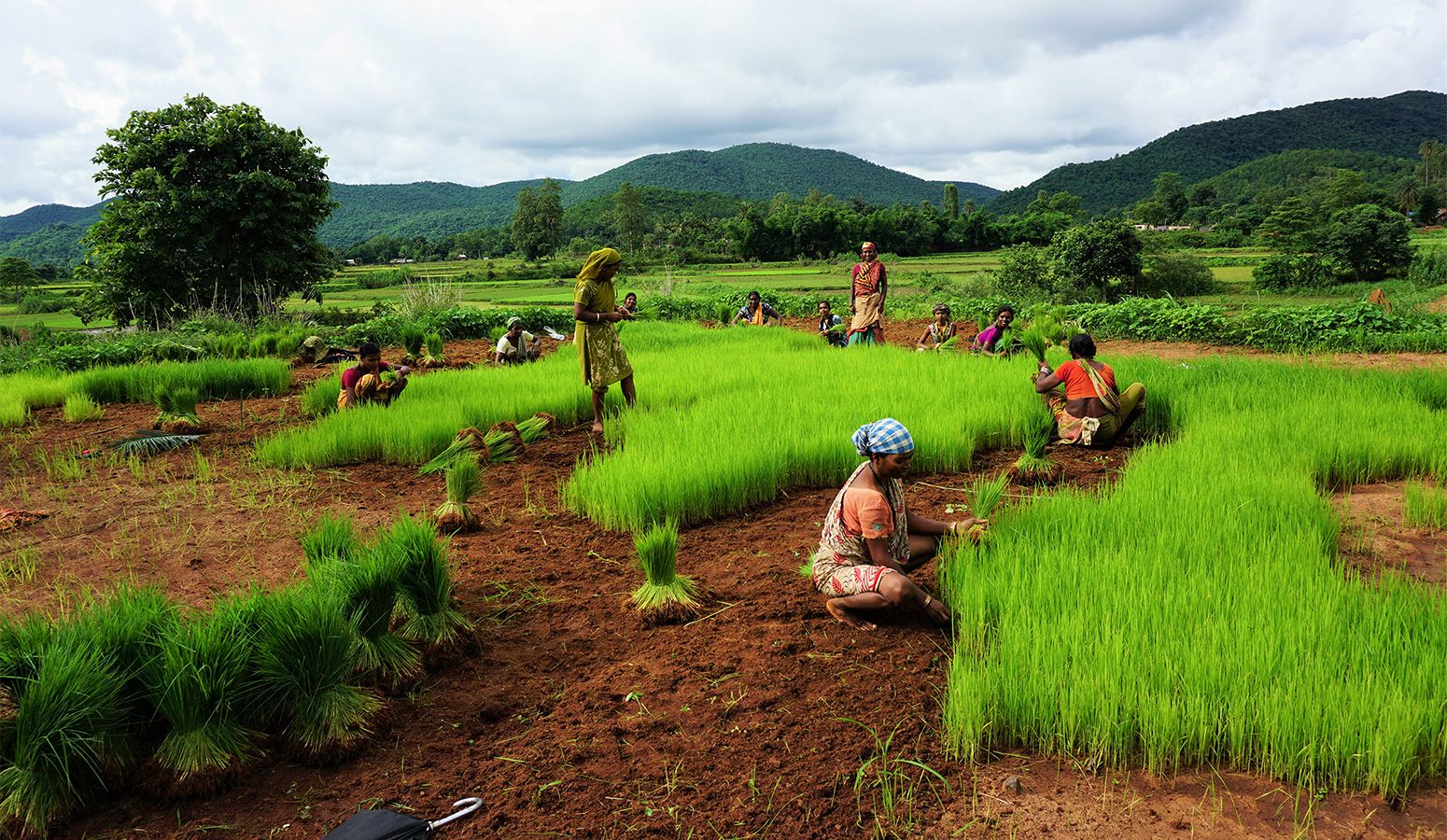
The view that productive agriculture is critical for employment creation and poverty elimination is now widely shared within the development community. Yet, this has not always been the case. In the run-up to the 2008 world food price crisis, many development practitioners, government officials and economists doubted whether agriculture could still play this role.

Agro-pessimism had set in during the 1990s and 2000s, with a decline in policy attention to the sector and agricultural investment. The food price spikes of 2008 brought a realisation that more needed to be done to strengthen agriculture in developing countries.


Also Read

Shivaji Sarkar

Virtue signalling on wheels

2 days ago
Geopolitics of water

Geopolitics of water

2 days ago

Today, world food prices are still 70 per cent higher than before the food price crisis (or 40-50 per cent in real terms) and the trade and policy environment is much more favorable to agriculture. But global income has also grown and poverty has declined and countries are more urbanised. So, what is the role of agriculture in poverty alleviation today and is the favorable inclination towards agriculture of the past years also backed by the more recent evidence?

Eight papers in a Special Issue of ‘World Development’ present the latest evidence. Using a multitude of analytical techniques (theoretical derivations, CGE modeling, econometrics), they confirm the continuing importance of agricultural development for poverty reduction. They also add important nuances.

Complementarity of the agricultural sector to industry and service sectors contributes much to economies in terms of economy of scale and economy of scope. Agriculture sector has both forward and backward linkage with industrial and service sectors of any economy in the world.

The poorest benefit the most from agricultural growth. Sustainable agriculture affects the extent of price decline and the extent to which producers and consumers gain. Computable general equilibrium model simulations for about 3,00,000 households from 31 countries suggest that agriculture’s advantage holds, irrespective of whether food is considered tradable or not. Agricultural growth appears a priority for poverty reduction in landlocked and coastal economies alike.

However, agriculture’s edge over non-agriculture sectors varies with the subsectors of the latter. There is substantial heterogeneity in the poverty-reducing effects of non-agriculture sectors across different subsectors. Trade and transport services have growth elasticities closer to those of agriculture, and those for manufacturing, especially agro-processing, can at times even exceed them.

Contrarily, the poverty-reducing effects of mining, finance, and business and government services are much more limited. The growth in productivity in trade and transport services can have both direct linkages and indirect ones, for example, by reducing the transaction costs for the marketed products. This is particularly beneficial in sectors with higher margins, such as agriculture and food.

The advantages of the agriculture sector over non-agriculture sector also depend on the financing source — a much-neglected fact. The way public investments are financed has first-order distributional implications, which may even overturn the underlying gains from rising productivity.

An increase in public capital formation targeted on agriculture can, for example, negatively affect real consumption wages of the rural unskilled if financed from a tariff, but have positive effects if financed through a consumption tax, which affects mainly the urban skilled.

Great reliance on aid-financed investment on the other hand, may cause real exchange appreciation, favouring the more traditional, domestic oriented non-agricultural sector over the more productive, open, modern sector.

Given that more and more unskilled labour is hired by the informal sectors of this closed (non-agricultural) economy, it may also lead to better poverty reduction than when public investment financing is less dependent on foreign grants, which would favour growth in the open modern economy and lead to greater labour productivity.

The writer is an economist.

Tags: AGRICULTURE
ShareTweetSendShare
Suggest A Correction

Enter your email to get our daily news in your inbox.


OrissaPOST epaper Sunday POST OrissaPOST epaper

Click Here: Plastic Free Odisha

#MyPaperBagChallenge

Mrutyunjaya Behera

December 12, 2019
#MyPaperBagChallenge

Anup Mahapatra

December 12, 2019
#MyPaperBagChallenge

Arya Ayushman

December 12, 2019
#MyPaperBagChallenge

Shreyanshu Bal

December 12, 2019
#MyPaperBagChallenge

Subhajyoti Mohanty

December 12, 2019
#MyPaperBagChallenge

Nishikant Rout

December 12, 2019
#MyPaperBagChallenge

D Rama Rao

December 12, 2019
#MyPaperBagChallenge

Saishree Satyarupa

December 12, 2019
#MyPaperBagChallenge

Swarit Praharaj

December 12, 2019
#MyPaperBagChallenge

Archit Mohapatra

December 12, 2019
#MyPaperBagChallenge

Pratik Kumar

December 12, 2019
#MyPaperBagChallenge

Narendra Kumar

December 12, 2019
#MyPaperBagChallenge

Pratyasharani Ghibela

December 12, 2019
#MyPaperBagChallenge

Jhili Jena

December 12, 2019
#MyPaperBagChallenge

Priyabrata Mohanty

December 12, 2019
#MyPaperBagChallenge

Subhajyoti Mohanty

December 12, 2019
#MyPaperBagChallenge

Sibarama Khotei

December 12, 2019
#MyPaperBagChallenge

Sarfraz Ahmad

December 12, 2019
#MyPaperBagChallenge

Archana Parida

December 12, 2019
#MyPaperBagChallenge

Parbati Mohanty

December 12, 2019
#MyPaperBagChallenge

Akshaya Kumar Dash

December 12, 2019
#MyPaperBagChallenge

Amritansh Mishra

December 12, 2019
#MyPaperBagChallenge

Rajashree Manasa Mohanty

December 12, 2019
#MyPaperBagChallenge

Adyasha Priyadarsani Sendha

December 12, 2019
#MyPaperBagChallenge

Ramakanta Sahoo

December 12, 2019
#MyPaperBagChallenge

Keshab Chandra Rout

December 12, 2019
#MyPaperBagChallenge

Surya Sidhant Rath

December 12, 2019
#MyPaperBagChallenge

Lopali Pattnaik

December 12, 2019
#MyPaperBagChallenge

Manas Samanta

December 12, 2019
#MyPaperBagChallenge

Akriti Negi

December 12, 2019

Archives

Editorial

Return of the Native

Tarique Rahman
December 30, 2025

When Tarique Rahman, the 60-year-old son of former Bangladesh Prime Minister Khaleda Zia and chief of the Bangladesh Nationalist Party...

Read moreDetails

Silent Killer

December 29, 2025

Air pollution is increasingly being recognised as India’s gravest public health crisis in the post-COVID period, with medical experts warning...

Read moreDetails

Silent Complicity

December 28, 2025

By Aakar Patel Intent has an ally in apathy. Intent seeks to take ground; apathy will kindly adjust. Intent is...

Read moreDetails

Beyond Transfer Raj

Power of Continuity
December 27, 2025

The Centre’s recent directive to states regarding the transfer of IAS, IPS, and IFS officers pertains not only to administrative...

Read moreDetails
  • Home
  • State
  • Metro
  • National
  • International
  • Business
  • Editorial
  • Opinion
  • Sports
  • About Us
  • Advertise
  • Contact Us
  • Jobs
Developed By Ratna Technology

© 2025 All rights Reserved by OrissaPOST

  • News in Odia
  • Orissa POST Epaper
  • Video
  • Home
  • Trending
  • Metro
  • State
  • Odisha Special
  • National
  • International
  • Sports
  • Business
  • Editorial
  • Entertainment
  • Horoscope
  • Careers
  • Feature
  • Today’s Pic
  • Opinion
  • Sci-Tech
  • About Us
  • Contact Us
  • Jobs

© 2025 All rights Reserved by OrissaPOST

    • News in Odia
    • Orissa POST Epaper
    • Video
    • Home
    • Trending
    • Metro
    • State
    • Odisha Special
    • National
    • International
    • Sports
    • Business
    • Editorial
    • Entertainment
    • Horoscope
    • Careers
    • Feature
    • Today’s Pic
    • Opinion
    • Sci-Tech
    • About Us
    • Contact Us
    • Jobs

    © 2025 All rights Reserved by OrissaPOST